All Posts By

Ed

Euthanasia referendum: An oncologist’s perspective

By | Recent News

Stuff co.nz 6 August 2020
Family First Comment: An excellent commentary – from someone who is intimately involved in this issue….
“The other day I phoned a patient to discuss the options for treatment of her cancer and she pleaded with me not to deny her treatment. “I know I may have terminal cancer and I am older but I have so much to live for; please allow me to have treatment,” she said. I reassured her that she would be given any treatment that was suitable for her. It got me thinking that it is easy for patients to feel that somehow, they are not as worthy as others to receive treatment.“

OPINION: I am a doctor and I have worked with cancer patients for over 20 years. I love to just “roll my sleeves up” and do my job.

I do not often speak in public forums or give my opinions on issues, but I am so concerned with the implications of the End of Life Choice Act that I feel the need to speak out and share my story.

The other day I phoned a patient to discuss the options for treatment of her cancer and she pleaded with me not to deny her treatment. “I know I may have terminal cancer and I am older but I have so much to live for; please allow me to have treatment,” she said. I reassured her that she would be given any treatment that was suitable for her.

It got me thinking that it is easy for patients to feel that somehow, they are not as worthy as others to receive treatment.

One of the great privileges of my job is that I can care for those who in society’s eyes may be considered vulnerable. In my practice I care for patients with brain damage, elderly folk (96 is my record so far), prisoners, people with extreme learning difficulties, with severe mental illness and with hearing or visual impairment.

Each of these patients is in addition receiving care for terminal conditions. Should the End of Life Choice Act become law, each of these patients may become open to subtle coercion to feel that requesting medically assisted dying would be ‘the right thing to do’ to avoid being a financial or physical burden to those who care for them.

The Oregon Health Authority reports that 59 per cent of patients who requested assisted suicide in 2019 gave being a burden to their family as one of their reasons.

Dr Melissa James is a radiation oncologist affiliated with the organisation Doctors say no.
READ MORE: https://www.stuff.co.nz/national/health/euthanasia-debate/122351691/euthanasia-referendum-an-oncologists-perspective

signup-rollKeep up with family issues in NZ.
Receive our weekly emails direct to your Inbox.

Auckland 4-year-old ‘thriving’ a year after being given just weeks to live

By | Recent News

Stuff co.nz 5 August 2020
A year ago, Olivia Clark didn’t think she would get to celebrate another Christmas or birthday with her young daughter.

Four-year-old Luna was born with hypoplastic left heart syndrome, meaning the left side of her heart is missing.

After four open-heart surgeries, the first of which Luna had at just two days old, fluid in her body refused to drain and doctors said they weren’t confident she would survive another surgery.

In August 2019, the Clark family took Luna home after about five months in Auckland’s Starship Children’s Hospital.

They had decided her quality of life was more important, and they wanted to give her all the experiences she wanted.

Luna’s team of doctors said her family may have just four weeks with her if the fluid continued at the rate it was filling up.

But a year later, her mum says Luna is “absolutely thriving”.

“They can’t really explain it, we can’t explain it, it’s just … she’s just not ready to go.”
READ MORE: https://www.stuff.co.nz/national/health/122341930/auckland-4yearold-thriving-a-year-after-being-given-just-weeks-to-live

twitter follow us

Hundreds of Sick Canadians Euthanized for Loneliness

By | Recent News

Euthanasia Prevention Coalition 28 July 2020
Family First Comment: We are told that euthanasia is “compassion.” But how compassionate is it when last year in Canada, hundreds of sick people were euthanized because of loneliness? The country’s 2019 MAID [medical assistance in dying] Annual Report found that 13.7% of the 5,631 Canadians killed by doctors asked to be lethally injected because of “isolation or loneliness.” If my math is right, that’s about 771 people, or 64 a month, or two per day.

The country’s 2019 MAID [medical assistance in dying] Annual Report found that 13.7 percent of the 5,631 Canadians killed by doctors asked to be lethally injected because of “isolation or loneliness.” If my math is right, that’s about 771 people, or 64 a month, or two per day. Good grief!

Some of the other reasons people gave for asking to be killed:

  • Loss of ability to engage in enjoyable activities, 82.1 percent. That’s a serious concern, but with proper interventions, it can be overcome.
  • Loss of ability to perform activities of daily living, 78.1 percent. Ditto.
  • “Inadequate control of pain (or concern about it),” 53.9 percent. That’s a scandalously high percentage. Palliative and hospice pain-control experts will tell you that most serious pain in terminal illnesses can be successfully alleviated.
  • Loss of dignity, 53.3 percent. Again, this is a serious concern but can be overcome with appropriate care.
  • Perceived burden on family, friends, and caregivers, 34 percent. In other words, people put themselves out of their loved one’s misery.
  • Emotional distress/anxiety/fear/existential suffering, 4.7 percent.

These statistics are scandalous and should make Canada deeply ashamed.

Alas, most Canadians are proud that their doctors can legally kill sick people whose deaths are “reasonably foreseeable.” Not only that, but the country is now engaged in the process that will expand the conditions qualifying for lethal injection, including incompetent people with dementia if they asked to be put down in an advance directive.
READ MORE: https://alexschadenberg.blogspot.com/2020/07/hundreds-of-sick-canadians-euthanized.html

signup-rollKeep up with family issues in NZ.
Receive our weekly emails direct to your Inbox.

New framework to address inequity for Māori in hospice care

By | Recent News

TVNZ One News 29 July 2020
A new framework to improve the services for Māori whānau in hospice care has been launched.

Mauri Mate is a new palliative care structure, which focuses on the quality, equity and compassion of hospices in Aotearoa.

It’s the first of its kind, with extensive collaboration between the Te Ohu Rata o Aotearoa (The Māori Medical Practitioners Association), Totara Hospice in South Auckland and Mary Potter Hospice in Wellington.

It involves improving the access for Māori whānau, as well as increasing the cultural competence and awareness of staff in palliative care.

Māori clinicians, leaders and academics were brought together to ensure the framework was “by Māori, for Māori”.

The collective told Te Karere the experience for Māori receiving this care needed to be “positively different”.

“We really need to address this inequity, accessibility and quality to this service,” said Dean Ogilvie, trustee of Totara Hospice.

Research and literature, as well as kōrero between health providers and the community, highlighted the need to improve the cultural safety and cultural value of Māori .
READ MORE: https://www.tvnz.co.nz/one-news/new-zealand/new-framework-address-inequity-m-ori-in-hospice-care

signup-rollKeep up with family issues in NZ.
Receive our weekly emails direct to your Inbox.


Talanoa – End of Life Choice Bill discussion (2019)

By | Recent News

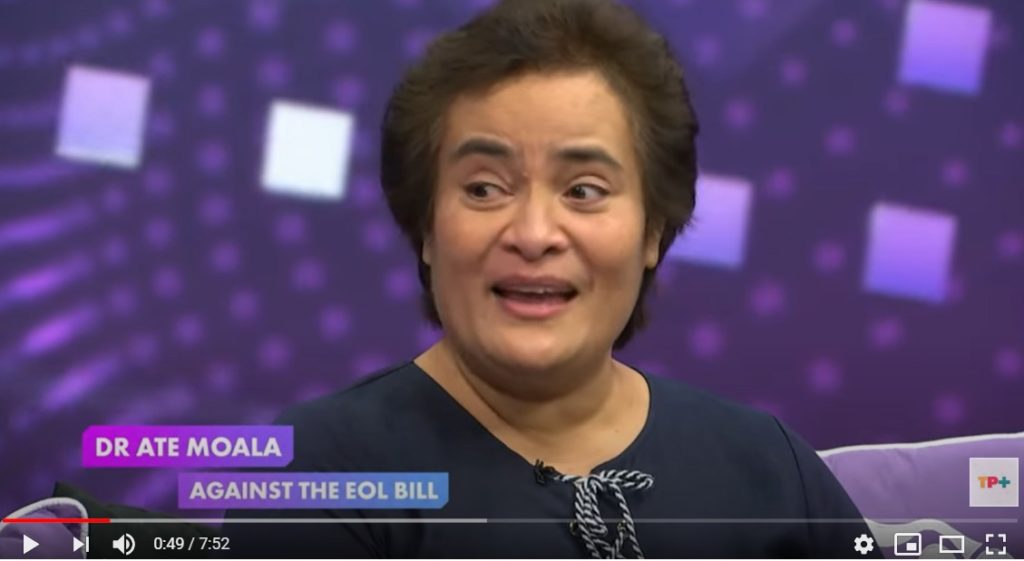
This week’s talanoa we are joined by Dr Ate Moala, who is against it and social work student, Togi To’o who strongly supports the bill. The End of Life Choice Bill gives people with a terminal illness or a grievous and irremediable medical condition the option to request assistance to die.
Dr Ate Moala is also a board member of Family First NZ.

Euthanasia referendum: Could terminal patients really be ‘dead by the weekend’?

By | Recent News

NZ Herald 25 July 2020
Family First Comment: The NZ Herald is working hard to allay the concerns around the flawed euthanasia bill.
• Apparently it’s not a ‘slippery slope’ – it’s ‘deliberate and considered reform’
• It concedes that pinpointing whether someone has 6 months to live is very difficult – yet it’s the key component of the bill!
• The Ministry of Justice agrees that somebody could be killed within 3-4 days – but apparently it’s likely to take months to do the paperwork. (We know it’s a government department – but pull the other one!)
• They question concerns around ‘duty to die’ & ‘abuse of the vulnerable’ (apparently there’s also other reasons – wow, that feels better then), and ‘increased suicide rates’ (we’re assured that “experts stress New Zealand has unique social, cultural, political and other factors”.
Sheesh. They don’t do a very good job at allaying the legitimate concerns around a flawed law.
Protect.org.nz

Euthanasia could soon be legal in New Zealand, but what exactly would that mean?

Could a patient tell their GP they want to die on a Wednesday and be dead by the weekend?

Is it inevitable that the proposed euthanasia law would be expanded from the terminally ill to those with depression? Or to children? And how secure are the safeguards?

These are some of the debates taking place in public meetings, on social media and over family dinner tables.

As part of the Herald’s ongoing coverage of the euthanasia and cannabis referendums, we take a look at some of the most headline-grabbing arguments around voluntary euthanasia and whether they stack up.

The ‘slippery slope’
It is one the most common arguments against voluntary euthanasia – that making it available for a small group of people, such as terminally ill adult patients who are in decline, will inevitably lead to it being broadened to more people, such as those with mental illness or young people.

Opponents usually point to the examples of the Netherlands and Belgium, where people can get access to euthanasia on the grounds of psychiatric illness, and where there is no minimum age for eligibility.

But there is no evidence that broadening the law is inevitable wherever euthanasia is legalised.
READ MORE: https://www.nzherald.co.nz/nz/news/article.cfm?c_id=1&objectid=12350755

signup-rollKeep up with family issues in NZ.
Receive our weekly emails direct to your Inbox.

Controversial philosopher Peter Singer defends his infanticide views

By | Recent News

NewsHub 23 July 2020
Family First Comment: How gross. But with free speech, he’s entitled to be objectionable, flawed, idiotic, ignored, and just plain wrong. We need to be reminded of these gross views. 
“ Huhana Hickey, who has used a wheelchair since 1996 and was diagnosed with multiple sclerosis in 2010, said in February Singer is “not an expert in the area of disability. His views against disabled people have been picked up by the abled community over the years and a lot of his views have been used against us,” she said. “He has every right to freedom of speech, they have every right to host him. I have every right to protest and to counter his speech around disability.”

An Australian philosopher has defended his controversial views that parents of babies who have disabilities should have the right to euthanise them.

Peter Singer, a professor of ethics, has argued it’s ethical to give parents the option to euthanise their babies if they have “severe disabilities”.

He told Magic Talk his views aren’t “all that different from things that are happening right now” that are already generally approved.

He says parents of severely disabled children are consulted by their physicians if the child is on a ventilator and in an Intensive Care Unit as to whether they want to continue to ventilate the child, he gives as an example.

“I’m talking about really severe cases where the prospects for the child are very poor, and if parents say ‘look under these circumstances it would be better to withdraw the ventilator’, the doctors will agree and they know that means the child will die,” he says.

“I think they’re doing what I’m suggesting, it’s just they’re doing it by withdrawing a treatment rather than by taking some active measures.”

Singer was due to arrive in New Zealand in June to discuss his views that promised to teach “how to apply ethics to your everyday life”.

However, his event was cancelled by the venue after complaints were made.

“I was very surprised the venue cancelled the booking without even checking with me about the nature of the complaints that were being made. It seems like a knee-jerk response. Somebody complains, you cancel the speaker. It seems like a pretty strange way to run a venue,” he says.

Before the cancellation, New Zealand’s disabled community was outraged he was scheduled to visit.
READ MORE: https://www.newshub.co.nz/home/new-zealand/2020/07/controversial-philosopher-peter-singer-defends-his-infanticide-views.html

signup-rollKeep up with family issues in NZ.
Receive our weekly emails direct to your Inbox.

Underfunding no argument for assisted dying

By | Recent News

NewsRoom 23 July 2020
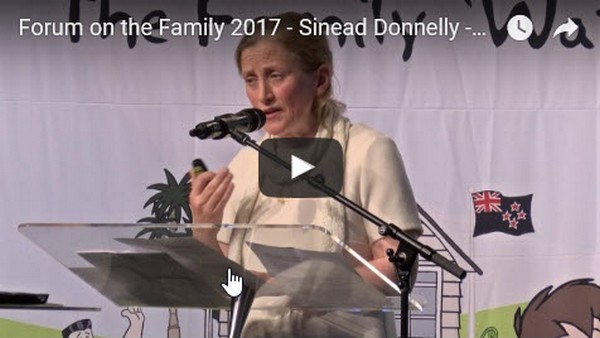
Family First Comment: Superb article from palliative care specialist Dr Sinead Donnelly…
“Every week as doctors we see cases where disabled, sick or mentally ill patients will, at their most vulnerable point, contemplate suicide. With the right care and medicine the vast majority are brought out of this vulnerable state to a place of health. Under the proposed Act, those same people could be dead within 72 hours.
As doctors caring for people who are dying every day we know the difference that this legislation will make to vulnerable people. It will expose the vulnerable to the extraordinary burden of a duty to die. We are voting no and we invite you to join us in opposing this Act.”

Arguing for assisted dying legislation on the basis NZ’s palliative care is underfunded is like saying that the car needs a clean so should be pushed off a cliff, writes Dr Sinéad Donnelly

In recent weeks there have been unsubstantiated claims in New Zealand media by pro-euthanasia, retired doctors or ‘veteran medical specialists’ around the End of Life Choice Act, which will be voted on during the upcoming referendum.

As specialist doctors trained in palliative medicine and currently practising in New Zealand, we’re extremely concerned at their argument in favour of euthanasia. It’s wrong and it’s dangerous.

First, they argue in favour of euthanasia because, in their words, palliative care has been “underfunded from the start and access and quality are patchy”. They say that aged residential staff “are overworked and often poorly trained in palliative care for the dying”. In other words, they want us to vote at the referendum in favour of euthanasia due to inadequacy and inequity of palliative care and inadequate aged residential care staffing.

This is a little like arguing that the car needs a clean so should be pushed off a cliff.

When have we, as a society, agreed to prematurely end the lives of patients due to poor funding? In any other situation that would be called callous and unacceptable. It certainly doesn’t pass the kindness test.

The second irresponsible statement is that “the End of Life Choice Act is one of the safest in the world”. It is not. The Act’s claimed protection against pressure from “another person” is poorly drafted and provides inadequate levels of protection to vulnerable New Zealanders. For example, the Act requires only one doctor (the first doctor to whom a request for euthanasia or assisted suicide is made) to only “do his or her best” to ensure that person requesting euthanasia has expressed their wish “free from pressure” by “any other person”.

The Royal New Zealand College of General Practitioners, the very doctors who are also going to be on the front line of the process, told Parliament they won’t be able to detect coercion or pressure in all cases with this test, and that there will be wrongful deaths under this law. To wit:

“The College … considers clause (h) where the medical practitioner is required to ‘do his or her best to ensure that the person expresses his or her wish free from pressure’ is problematic. As one member wrote: ‘It will prove impossible to determine if a patient is ‘free from coercion’. What criteria will doctors use to determine whether or not coercion exists? If patients request assisted death, there is no provision in the Bill as to what a doctor should do if she or he thinks that coercion is actually present. Coercion of patients will be impossible to discern in every request for assisted death. Doctors will not be 100 percent correct in their assessments of coercion. Wrongful deaths will be the result of this proposed new law.’”
READ MORE: https://www.newsroom.co.nz/underfunding-no-argument-for-assisted-dying
twitter follow us

Euthanasia law proposed for healthy over-75s who feel their lives are complete

By | Recent News

Dutch News 19 July 2020
Family First Comment: This is so disturbing. Apparently euthanasia is now a response to depression and mental illness…
“Govt research revealed that around 10,000 people over 55 have a serious death wish.”
#slipperyslope
Protect.org.nz

A Dutch MP has submitted a long-awaited bill to offer healthy Dutch over-75s the right to ask for euthanasia.

Pia Dijkstra, medical ethics lead for D66, promised to go forward with the controversial bill at the end of January, after government research revealed that around 10,000 people over 55 have a serious death wish.

But the bill proposal, handed in on Friday, is likely to stoke conflict in the government because the two Christian parties in the coalition are radically opposed to it.

Free vote
Although the right to choose death is supported in theory by Mark Rutte’s VVD, and a previous attempt at legislation in 2016 also had the support of the PvdA labour party and GroenLinks, it is unclear whether Dijkstra’s bill would win over the majority of MPs – which it would need, as it would be a free vote.

Her proposed law would mean healthy over-75s with a strong death wish for at least two months could have the assistance of an ‘end-of-life supervisor’ to die. But opponents of the law – including the KNMG Royal Dutch Medical Association – believe it could undermine the strict due care conditions of the existing euthanasia law, arguing that lonely and impoverished older people should have help, not the choice of an early death.

Benjamin Meijer, a spokesman for D66, told DutchNews.nl that his party had agreed with the coalition to wait for the publication of research into the group of older people who want help to die, and was then busy with the joint effort against the coronavirus.
READ MORE: https://www.dutchnews.nl/news/2020/07/euthanasia-law-proposed-for-healthy-over-75s-who-feel-their-lives-are-complete/

facebook_icon

Euthanasia Flyer is Misleading and Biased

By | Recent News

Media Release Euthanasia-Free NZ 20 July 2020
Family First Comment: Andrew Little (Minister of Propaganda) is up to his tricks again – this time on the euthanasia referendum. Shocking.
“The government’s summary misrepresents the End of Life Choice Act. It oversimplifies one of the eligibility criteria and overstates the protections against pressure.”

“The Government’s official information on the End of Life Choice Act referendum is misleading and biased,” says Renée Joubert, Executive Officer of Euthanasia-Free NZ.

“The government’s summary misrepresents the End of Life Choice Act. It oversimplifies one of the eligibility criteria and overstates the protections against pressure.”

Euthanasia doesn’t need to be a last resort

The flyer identifies one of the eligibility criteria as, “experience unbearable suffering that cannot be eased”.

“This statement is misleading, because it implies that a person would be eligible only if no treatment exists”, says Ms Joubert.

In reality, the Act states that an eligible person needs to “experience unbearable suffering that cannot be relieved in a manner that the person considers tolerable”.

“The Act would allow an eligible person to receive a lethal dose if they refused treatment. A person can refuse treatment that would relieve their suffering. The person would not even need to try the treatment. They would only need to say that they don’t consider it tolerable,” says Ms Joubert.

“Under the End of Life Choice Act, euthanasia doesn’t need to be a last resort.”

Weak protections against pressure

“The government flyer overstates the protections against pressure and does not use the wording from the Act”, remarks Ms Joubert.

“The flyer uses the heading, ‘Making sure the choice is freely made’. This phrase is not impartial nor factual, because the Act does not use this phrase and makes no such guarantee.

“Whether the Act’s clauses are sufficient to ‘make sure the choice is freely made’ is a matter of personal opinion, not fact,” she says.

The flyer goes on to state, “The doctor must do their best to make sure that a person’s choice to ask for assisted dying is their own.” This is an overstatement of what the Act actually requires.

The Act requires only one doctor to only “do their best to ensure the person expresses their wish free from pressure from another person”.

“What might ‘do their best’ mean to a busy doctor? It’s a subjective requirement that cannot be measured or enforced,” she says.

“The doctor doesn’t need to have met the person before and doesn’t need to speak to the person face-to-face. During an online consultation the person’s abuser could be sitting in the same room and pressuring them to request assisted dying without the doctor being aware of it.”

“The word ‘decision’ has a wider meaning than ‘express their wish’. A person could ‘express their wish’ free from pressure, even if their ‘decision’ to request assisted dying was influenced by pressure or abuse that occurred earlier. As many victims of psychological abuse know, a skilled manipulator can make a victim mistakenly believe that something is their own choice.”

Unlike the Australian, US and Canadian laws, the End of Life Choice Act does not require any independent witnesses.

No independent witnesses are required when the person expresses their wish; when they confirm their wish by signing a form; or when they receive the lethal dose.

“If a health professional put pressure on the person, their guilt could be impossible to prove. The only witness may be dead”, warns Ms Joubert.

The doctor is required to check for pressure by speaking to “health professionals who are in regular contact with the person” and to family members who are “approved by the person”.

“This is a very weak safeguard, considering the fact that many adults do not have regular contact with health professionals and do not live with family members.  Pressure from a boyfriend, girlfriend, caregiver, employer, friend, flatmate or neighbour could easily remain unreported.”

Only if the doctor or nurse practitioner suspects that a person is not “expressing their wish free from pressure from any other person”, do they need to stop the process.

“The only pressure acknowledged in the Act is pressure from another person. Nobody would be required to check for pressure coming from a group; or pressure due to poverty, homelessness, loneliness, depression; or pressure due to a lack of timely access to medical care or assisted living support.”

Ms Joubert laments, “A person who lacks the support they need will not be making a free choice.”

Conclusion

“The government’s summary does not represent the End of Life Choice Act accurately”, warns Ms Joubert. “We encourage the public to also read the Act for themselves.”

“This referendum is not about our personal views on whether euthanasia or ‘assisted dying’ should be legal in principle. We are not voting on a concept.

“We are voting on the details of a specific piece of legislation. Regardless of our personal views, each one of us needs to decide whether we support the finer details of this particular Act.”
ENDS