All Posts By

Ed

Reverend questions euthanasia bill’s impact on te ao Māori

By | Recent News

Radio NZ News 15 January 2018
Family First Comment: “Hospice New Zealand Māori advisory group chair Ria Earp said Māori were generally more open about death. “There is more of an ability and willingness to discuss death and dying and particularly how we care for our funeral services and how we care for grief.” Mrs Earp said Hospice New Zealand does not support the bill, and would like to see more focus on palliative care.”
Make a Submission against the bill – www.protect.org.nz

MPs are being questioned about how euthanasia fits in with their Māori values, as a bill legalising euthanasia makes its way through parliament.

ACT Party leader David Seymour’s End of Life Choice Bill was drawn from the ballot last year and it passed its first reading in December with strong backing from Māori MPs across all political parties.

Reverend Chris Huriwai questioned Māori MPs on Twitter about why they support the bill.

The Gisborne-based reverend said he does not back the bill because of personal beliefs, but he wanted to spark a wider discussion on euthanasia.

“Not necessarily discussions for or against euthanasia but just keeping those … Māori concerns in our minds as we continued to grapple with something as big as this.”

Mr Huriwai said euthanasia might affect traditional practices such as tangi or funerals.

“How does a kaikaranga respond to calling on the body of someone who elected for themselves to die?

“How does someone who’s doing whaikōrero mihi to the departed with that sort of ever-present reality in the background.”

He said there were traditional Māori concepts including whare mate – where those who were sick or dying lived outside of the main village, similar to a hospice.
READ MORE: http://www.radionz.co.nz/news/te-manu-korihi/348127/reverend-questions-euthanasia-bill-s-impact-on-te-ao-maori
twitter follow us

Doctor support for assisted suicide drops radically after legalisation (Canada)

By | Recent News

No Euthanasia.org 11 January 2018
Family First Comment: This is significant.
“Prior to the (Canadian) legislation being passed, 48% of doctors surveyed indicated a willingness to participate in assisted suicide, with a further 30% saying they would do so with certain conditions being met, making a total of 78% of doctors supporting legalised killing. After the legislation passed, these numbers inverted, with most doctors admitting that they were unable to stomach the idea of killing their patients: …77% refused to actively participate in their patients’ medical-aid-in-dying process.”
Make a submission: www.Protect.org.nz

A survey of Canadian doctors reveals that the support of medical professionals for assisted suicide drops significantly once the process becomes legal, with most physicians now refusing to participate in the administration of lethal drugs to their patients.

According to the December 2017 edition of Magazine Le Spécialiste which details the survey, the objections from physicians “were far more frequent than we had anticipated based on our pre-Act survey.” Prior to the legislation being passed, 48% of doctors surveyed indicated a willingness to participate in assisted suicide, with a further 30% saying they would do so with certain conditions being met, making a total of 78% of doctors supporting legalised killing. After the legislation passed, these numbers inverted, with most doctors admitting that they were unable to stomach the idea of killing their patients:
77% refused to actively participate in their patients’ medical-aid-in-dying process, all of them using the conscientious objection clause, thus requiring a substitute physician be identified so as to provide the intervention required.

The number of physicians invoking the conscientious objection clause (77%) far exceeded our expectation of the use of this kind of refusal based on our afore-mentioned physician survey.

However, the report also noted that only a small number of these doctors fit the status for conscientious objection, as their reasoning did not involve “a true moral or religious objection”:

Results from the interviews revealed that only a minority of physicians (22%) had a true moral or religious objection to MAID [Medical Aid in Dying]. Among those opposed, the most frequent concerns expressed were feelings that MAID conflicted with medicine. They declared they had been taught to save lives, not end them. They also said they viewed end-of-life care as focusing on alleviating suffering. They expressed fear over the power to end of life that was being given to them.
READ MORE: http://www.noeuthanasia.org.au/doctor_support_assisted_suicide_drops_radically?utm_campaign=180111_digest2&utm_medium=email&utm_source=hopeaustralia

signup-rollKeep up with family issues in NZ.
Receive our weekly emails direct to your Inbox.


Alastair Scott: End of Life Choice Bill will alter pillar of society

By | Recent News

NZ Herald 8 January 2018
Family First Comment: “…However, it would also apply to those disadvantaged by age, physical or mental disability, sickness and poverty, and sadly those without the compassionate support of family.
Ill health is known to affect mental health, happiness levels and the ability to see a future without pain or despair. In a depressed or affected state I believe that one’s ability to make a definitive choice of this magnitude is compromised.”
Make a submission today – www.Protect.org.nz

Before the Christmas break, Parliament debated David Seymour’s End of Life Choice Bill.

The bill passed its first reading and is now sitting with a select committee which will open for public submissions in the new year.

I cast a “No” conscience vote in the first reading. I respect that many of you will have a different position.

The euthanasia and assisted suicide debate is extremely emotive. It asks us to question some very fundamental beliefs and examine long-held moral codes. Death is often a taboo conversation subject in our society.

Some would say Parliament is at its best when members speak their own minds and from personal experience, and party politics do not play any role. We each have our own viewpoints and I would like to explain my vote to you.

David Seymour’s bill supports the death of patients in two different ways. The first is called euthanasia. Euthanasia is an ancient Greek concept which in a broad sense means a ‘good death’. In our society, euthanasia has come to mean a doctor delivering a lethal injection to a person, usually something like phenobarbital.

The second method described in the bill is physician-assisted suicide, where the doctor gives the patient a lethal drug that they can take a time of their choosing. This bill allows for both methods which is almost unheard of in any other jurisdiction around the world.

In my role as an MP, I am a law-maker.

I take this role seriously and believe that this bill will forever alter a fundamental pillar of our society. The role of the Parliament is to ensure that we have a set of laws that protect our community. If we are going to change the law, we must ask ourselves: “will this law keep all members of our society safe?” On this matter of life and death the outcomes are absolute.

I understand the pain that many individuals, life-partners and family members face during battles with mental and physical illness. I understand that euthanasia offers an option. The law should apply to those who have carefully and philosophically considered their choice, supported by family and professionals, with a clear view about their choice.

However, it would also apply to those disadvantaged by age, physical or mental disability, sickness and poverty, and sadly those without the compassionate support of family.

Ill health is known to affect mental health, happiness levels and the ability to see a future without pain or despair. In a depressed or affected state I believe that one’s ability to make a definitive choice of this magnitude is compromised. A positive state of mind is regarded by many health professionals as a factor in physical recovery.

A decision to end a human life must be based in categorical fact and I do not believe that diagnosis is always as rigorous as we might like to believe. Over many years the euthanasia debate has brought forward many examples of those diagnosed with a debilitating condition or terminal illness that have ‘beaten the odds’ or survived for much longer than doctors predicted.

Some individuals have even reached a place in which their pain or symptoms were reduced dramatically, their quality of life returned and they were ‘cured’.

In addition, treatments and medical interventions frequently progress, new drug therapies are developed and pain management techniques improve.

The bill compromises the integrity of our healthcare services in New Zealand. Healthcare should enhance quality of life for individuals.

The World Health Organisation describes palliative care in a way that reflects my own thinking – it affirms life and regards dying as a normal process, it should neither hasten nor postpone death.

Health services have a duty of care, not a duty to end life, or a duty to make a decision about a life. The bill impacts the role of the medical professional, as it will place a moral burden on the shoulders of healthcare professionals. I think it will have a profound impact on the relationship between doctors and patients.

I am concerned about a future in which medical professionals and society become more comfortable with euthanasia as an option.

It is possible that judgments will be made about the value of life. For an individual to look to end their life to relieve emotional and financial distress for families is not a place of genuine ‘choice’, and, I believe, that would more likely to apply to those more vulnerable individuals, with less financial and social resources.

As a country, I would like more emphasis and funding to be delivered to palliative and end of life support services. We need to effectively care for individuals and families in their hour of need.

If you feel strongly about this issue, please get involved in this debate by contacting me or through the select committee public consultation process. The views of our local community are important.
http://www.nzherald.co.nz/hawkes-bay-today/opinion/news/article.cfm?c_id=1503459&objectid=11962650 

twitter follow us

New York governor's aide with brain cancer who fought AGAINST doctor-assisted suicide bill dies aged 36

By | Recent News

Daily Mail 31 December 2017
Family First Comment: We can live without euthanasia
www.protect.org.nz

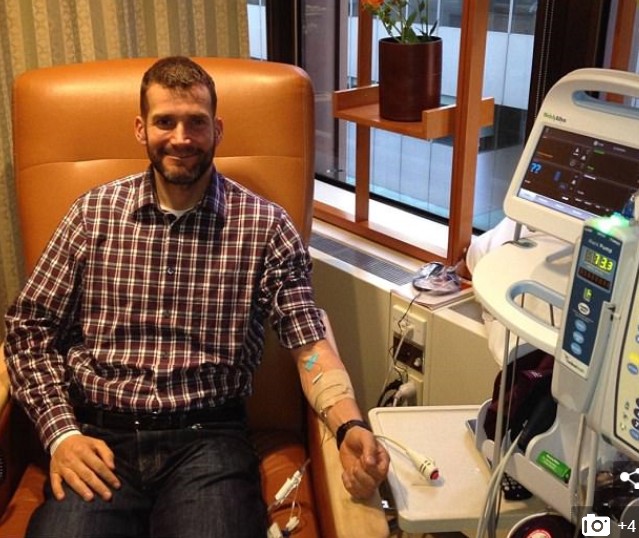
A former Marine who was a vocal opponent of physician-assisted suicide and suffered from brain cancer died on Saturday.

J.J. Hanson died at the age of 36, according to the New York Catholic Conference, who worked closely with him fighting the Death with Dignity bill that seeks to legalize physician-assisted suicide in New York.

‘JJ lived his motto: ‘Every day is a gift, and you can’t ever let that go,’ said Kathleen Gallagher, director of pro-life activities for the Catholic Conference, to New York Daily News.

‘He and (his wife) Kristen are a true testament to living their faith through adversity, and JJ’s death is a loving example of an authentic ‘death with dignity.’

Hanson was once a former aide to both Governor Eliot Spitzer and David Paterson.

He became the president of the Patient Rights Action Fund, a group that despised assisted suicide, in 2015.

Hanson shared with the publication in 2015 that he once supported the bill but then in his final years, he dedicated a lot of his efforts fighting physician-assisted-suicide.
READ MORE:  http://www.dailymail.co.uk/news/article-5224165/J-J-Hanson-opponent-assisted-suicides-dies-age-36.html

twitter follow us
 

Unequal protection

By | Recent News

World News Group 28 May 2016
Family First Comment: “When you were the sickest in your life, how well were you thinking at that time? Not good, right? Now multiply that exponentially. … Put [the drugs] in a glass of beer, done. In that moment of weakness and difficulty and stress, done. … I don’t think I would have done that, but there’s many people who could’ve or would’ve in that situation.” J J Hanson

J.J. Hanson, 35, is a tall former Marine from New York’s Hudson Valley who did a tour in Iraq. He speaks so quickly and sharply that someone meeting him for the first time wouldn’t know that two years ago he couldn’t talk, walk, read, or write.

The loss of Hanson’s basic functions came shortly after a shattering diagnosis for a man with a wife and a young son. In 2014, out of the blue, Hanson had a seizure while he was at work. Doctors discovered he had stage 4 glioblastoma (GBM), one of the deadliest forms of brain cancer—and the same kind of cancer that assisted suicide advocate Brittany Maynard had when she ended her life in late 2014.

Three different doctors told Hanson his case was terminal and said he had four months to live. But he was determined to do aggressive treatment anyway. Doctors operated on his brain, which led to nine seizures in a day and his “cognitive loss” of basic functions. He joined a clinical trial. In order to recover from his cognitive loss, Hanson read children’s books, slowly working back up to adult reading.

Now he has survived two years—walking, talking, reading, and writing—and he is in what he calls remission, although he calmly admits that with GBM, there is really no such thing as remission.

Hanson, who worked in New York state government before turning to the private sector, had not given much thought to the issue of assisted suicide until he had a terminal disease. Now he is leading efforts against physician-assisted suicide legislation around the country with the organization Patients’ Rights Action Fund. New York is currently considering two bills to legalize the practice. California, Oregon, Vermont, and Washington have already made it legal.

AT MONTH FIVE OF HIS TREATMENT, the normally irrepressible Hanson became depressed. He says he lay in his bed and asked himself if he should give up, if it would make things easier for everyone if he were gone. He decided to continue—but then he imagined what others in his position might do.

Under the current New York proposals, a patient like Hanson could go to a doctor when he received a terminal prognosis and, if he were in a good mental state, receive a prescription for the lethal drugs. Then the patient could go home and put the drugs on his nightstand for whenever he might reach that desperate moment.

“When you were the sickest in your life, how well were you thinking at that time?” Hanson asked. “Not good, right? Now multiply that exponentially. … Put [the drugs] in a glass of beer, done. In that moment of weakness and difficulty and stress, done. … I don’t think I would have done that, but there’s many people who could’ve or would’ve in that situation.”

At the state Capitol Hanson walked the halls with a black binder under his arm, filled with articles and notes about assisted suicide data. He needs the binder to remember things after the surgery nicked certain circuits in his brain. Before cancer, he says, he could remember the specific details of almost every person he met. Now, sometimes he forgets the names of family members, though he is still quick to recall most information.

Speaking helps him speak, so he speaks with legislators. He emphasizes how legalizing assisted suicide will change social norms, legitimizing the general practice of suicide. A new report from the Centers for Disease Control and Prevention shows a 24 percent increase in suicides over the last 15 years, after 15 years of declines. The rate of increase is also higher in recent years.

Hanson also emphasizes to legislators how assisted suicide will shrink an already small pool of terminal patients willing to participate in clinical trials. As it is, glioblastoma patients rarely live long enough to participate in a trial, so the pool of those who can participate in research that might help future patients is tiny. This session at least, it looks as if Hanson’s arguments are helping to keep the legislation from passing.

“I think we will be fighting this bill for 20 years,” said Hanson. “I don’t think it’s going away.”
READ MORE: https://world.wng.org/2016/05/unequal_protection

signup-rollKeep up with family issues in NZ.
Receive our weekly emails direct to your Inbox.

Assisted Suicide: How One Woman Chose to Die, Then Survived

By | Recent News

In 1994, Jeannette Hall, a resident of King City, Ore., voted in favor of Ballot Measure 16, which for the first time in the United States, would allow terminally ill patients to end their own lives through physician-assisted suicide.

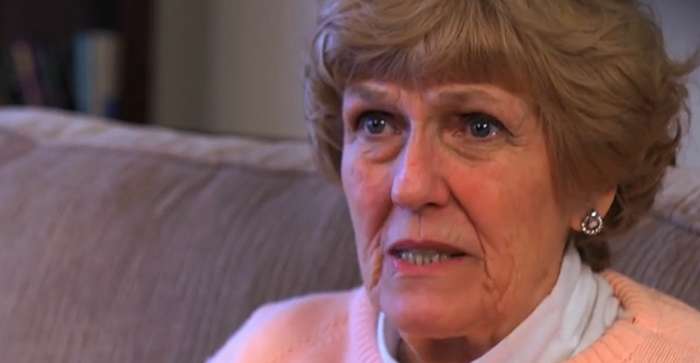
Six years later, she would be diagnosed with inoperable colon cancer. Doctors gave Hall, who was 55 at the time, two options: She could get radiation and chemotherapy and attempt to fight the cancer, or she could take a lethal dose of barbiturates to end her life. “I was calling it over,” she said. “I wasn’t going to do chemo.

When I heard what might take place in radiation … I wasn’t going to do it. I looked for the easy way out.” Without treatment, Hall was given six months to a year to live, and therefore qualified for physician-assisted suicide through Oregon’s Death With Dignity law. Dr. Kenneth Stevens, one of Hall’s two cancer doctors, works at the Oregon Health and Sciences University specializing in radiation medicine. He has long opposed physician-assisted suicide.

For weeks, Stevens resisted giving Hall the lethal dose of drugs, hoping he could convince her to change her mind. After multiple phone calls and doctors’ appointments, Stevens said something that changed her mind.

Stevens learned that Hall had a son, Scott Walden, who was living in Astoria, Ore., training to be a state trooper. At the time, Walden didn’t even know his mom had cancer—let alone that she was asking her doctor to prescribe her a lethal dose of life-ending drugs. Stevens, in a last ditch effort to convince Hall against death, asked her: “Wouldn’t you like to see him graduate? Wouldn’t you like to see him get married?” “That’s what kept me back. That one sentence,” Hall said. “If you hadn’t said that, I wouldn’t be here.”

Fifteen years later, Hall is now cured of cancer and celebrating her 70th birthday with her son—who has since graduated from the police academy but has yet to get married.

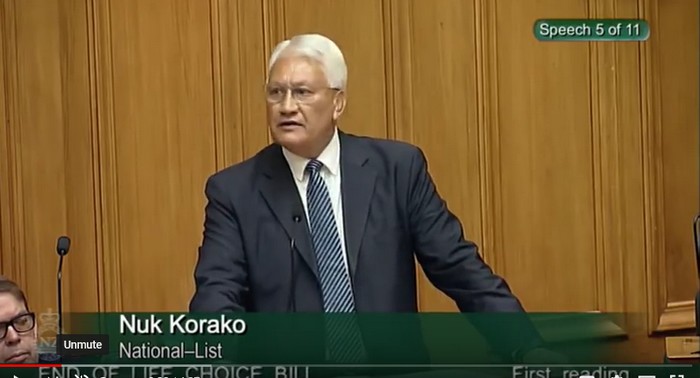
End of Life Choice Bill – 1st Reading – Nuk Korako (National)

By | Recent News

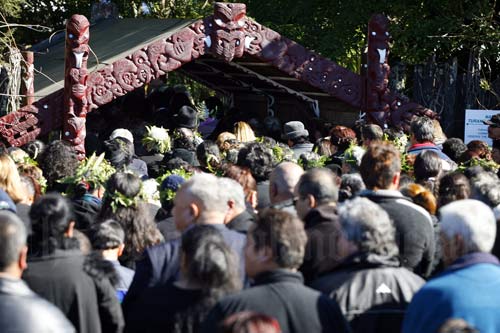
Tēnā koe e Te Mana Whakawā. It was the late Ngati Porou kaumātua Amster Reedy who stated, “We bring people into this world. We care for them right from the time they are conceived, born, bred, in health, sickness, and death. The rituals still exist for every part of their lives.” Those rituals still will exist and we need to have faith in our ancestors. Euthanasia is foreign to Māori and has no place in our society.

In all my life, raised as a Ngāi Tahu Māori, I have never heard or known of a Māori concept that validates assisting dying. Witnessing the death of a whānau member is as intimate as it gets. To watch a painful death can be shattering; the indignities we may have to see our loved one suffer—unable to undertake the most basic human functions without support, watching their agony, feeling their helplessness and, often, their feeling that they are being a burden on their whānau—yet this is only part of the process. There is another side to death; that is the whānau side.

But death has never been a final ending for our people. It merely signifies the beginning of the journey to Te Rerenga Wairua and then onto the ancestral home of Hawaiki nui, Hawaiki roa, Hawaiki pāmamao. It is a life in the afterlife, where we gather once more with our tīpuna and our departed whānau, members, and friends.

The process of dying, for us, is a process of whānau. We hear of terminal illness inside the whānau. We know the time has come to mobilise and gather. We give the immediate whānau our physical, spiritual, and, if needed, financial support. The process of death is not just about a loved one, it’s also about our whānau. This process is an essential component of binding our whānau together. The act of caring for a whānau member is a process of learning, of grieving, of laughing, of despairing, of reminiscing, and of coming to that moment of peace when we can finally let them go. This process of death is as much for the living as it is for the dead. Many Māori see this as an essential expression of taha wairua [the spiritual side], or being a part of something that is greater than ourselves. The final act of dying is the point where the ancestors come to take that loved one home. It is a moment of extraordinary sadness but also joy, as we become aware that an ancestor is now in the room with us to accompany the loved one on their final journey.

In the debates throughout the country that have preceded this tonight, Māori voices have been few and far between because some Māori choose not to discuss such things and fear that their fundamental beliefs are treated as native superstition. To me, assisted dying is to fast-forward a process that ultimately denies our loved one the chance to be taken to their ancestral home and is, instead, left in limbo, on their own, in a transitional afterlife until their time finally arrives.

The real challenge is to ensure all whānau across Aotearoa have access to the full range of palliative care available to ensure that we can ease the passing of our loved ones and the burden of care that falls upon whānau, without resorting to artificially ending their life. Then, we will truly, here, have succeeded. On that basis, I cannot support this bill.

Āpiti hōno, tātai hōno, rātou ki te hunga mate, ki te hunga mate ki a rātou; āpiti hōno, tātai hōno, tātou ki te hunga ora, ki te hunga ora ki a tātou.
[The lines are joined and linked, they to the dead and the dead to them; the lines are joined and linked, we to the living and the living to us.] Let the dead be the dead and the living be the living. Kia ora tātou.

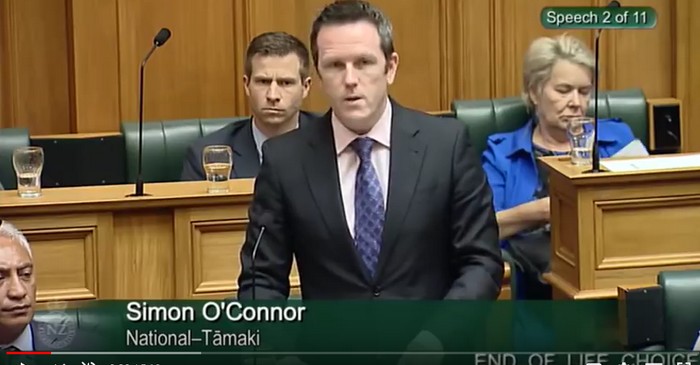
End of Life Choice Bill – 1st Reading – Simon O’Connor (National)

By | Recent News

I believe this is a sad day for the House. We are here talking about the State sanctioning killing of New Zealanders. This bill suggests that suicide is a solution under certain circumstances, and I stand today to reject this.

I spent two and a bit years chairing the Health Committee as over 21,000 Kiwis from across the spectrum spoke to us, and 80 percent, who had well considered it, said no. I’ve studied philosophy and human rights, I’ve been at hospital beds and hospices, I’ve seen more death and suffering than sometimes I care to remember, and, fundamentally, I do not believe doctors should be killing their patients.

Members of the House, this bill is about killing in two ways. The first is called euthanasia. It’s where the doctor takes an injection, usually something like phenobarbital, and injects it into you—only after they’ve sedated you, of course; couldn’t have the inconvenience of twitching. The other is physician-assisted suicide, where, again, they give you a massive dose of drugs. You take that yourself, at your own choosing—and hope that the kids don’t find it in the medical cabinet at the time.

This bill combines both of those. That’s almost unheard of in any other jurisdiction around the world. This bill before us tonight is the worst example of euthanasia legislation in the world. I say that as someone who has looked at every piece of legislation.

Where it starts, really badly, is clause 4. We hear it a lot: it’s all about terminal illness, up to six months. But the doctors, the medical people, will tell you that six months is just an indication; it’s not a guarantee. And the doctors will tell you too that they misdiagnose all the time.

They also talk in this bill about irremediable, grievous conditions. That’s incredibly broad, undefined. What is “irremediable”? What is “grievous”? Basically, it includes everyone, including those with disabilities.

But the bill also, rather insidiously, talks about suffering that a person deems intolerable—what you deem intolerable. Sorry, Mr Speaker—what members may deem intolerable. This is a clear indication that it is the courts who will be making decisions and choices, not this Parliament and certainly not the person.

In the debate in this space, I’ve often said, it’s between choice and public safety. Let’s be very clear: the current laws as they stand mean that no one will die against their will, but this proposed law that we consider tonight will make involuntary deaths possible. We know in this House we do not make things perfect, because changing this law will allow some to assist the suicide—well, sorry. People who choose to assist in suicide will put others at risk.

We know that this law applies to everyone. It does not apply simply to the rational and articulate; it applies to the elderly, the disabled, the sick, the vulnerable—all of us. Not everyone is fortunate enough to live with a loving, caring family. Not everyone has a doctor fully in tune with them and their needs. This law will apply to the depressed, the lonely, those who feel a burden, the disabled, the fearful. I should point out that these are the same feelings of a 16-year-old who is keen to suicide, the 40-year-old who has lost their farm, or the 80-year-old on the deathbed.

I repeat again, as I did a few months back, that you cannot stand in this House and decry the suicide of one group of people—say, the youth—and then encourage the suicide of another group—say, the sick. They are the same feelings that are there. And I don’t say it alone. It’s very easy for the media and others to attack, but, actually, this is the opinion of the major medical groups, the psychologists, and the youth workers. I add their voice tonight.

There’s a lot of talk about choice. Let me say one thing about choice: the patient in this space never makes the choice. If they did, there wouldn’t need to be doctors and psychologists and boards and panels. The doctors make the choices. The family makes the choices.

If you think I’m exaggerating, go and look up an example in the Netherlands recently. A woman with dementia who, yes, years ago, had said that she would like to die by assisted suicide, was held down after being sedated by her doctor and family—they put drugs in her tea. They sedated her, held her down as she screamed and yelled, and then they killed her. The doctor was able to report it, and they just said, “Oh, well, you acted in good faith, but she’s dead now.” So much for the choice and autonomy that she exercised.

And I’d point out too that if it’s about choice and autonomy, we all have it. If it’s a human right, all humans have it. There is a slippery slope, and one only needs to turn to Canada, which has already been mentioned, which is already pushing the boundaries.

There are no safeguards; there are just lots of criteria. Being 18 is not a safeguard. All the reporting comes after the fact. If you get it wrong, the person’s still dead.
Doctors don’t want to be part of this. The few that do will make a business of it, and there will be doctor-shopping. The conscience rights in this bill are a nonsense. If you oppose, the doctor must hand that person over to someone who will.

It’s a very, very poor bill, and, fundamentally—thousands of health professionals and others have argued in the recent public debate—this is an issue where the public safety will be put at risk. So I ask this House how many involuntary deaths and errors are we willing to accept through this law: one, five, 10—

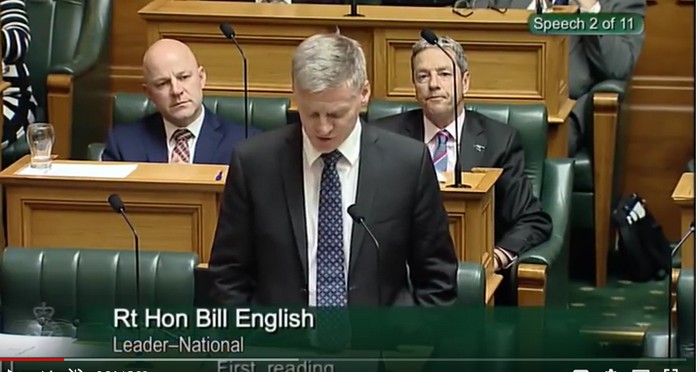
End of Life Choice Bill – 1st Reading – Bill English (National)

By | Recent News

I rise to oppose this bill, principally for the reason that this House has defeated such legislation twice in the last two decades, and it is this: it removes a principle at the core of the law written to protect everybody, and particularly the most vulnerable, and that is the blanket prohibition against taking the life of another. That is at the core of our criminal law that protects everybody, particularly the most vulnerable. In removing that prohibition, which has been in our law for as long as this country has existed, this Parliament is taking a huge step.

I appeal to our members tonight. I’m sure we’ve all had the experience—I know I have—or know about the experience, of witnessing the suffering, the fear, and the anxiety of a dying person and those around them, and, sometimes, a difficult death. Alongside that personal connection, we have to weigh up, in our role as lawmakers—not just as parents or children or siblings or friends of those who we’ve seen die, but as lawmakers. Our role is not principally to alleviate suffering; our role is to ensure that our society has a set of laws that protect those who most need protection.

Did you know that in our law, section 179 of the Crimes Act, it is a crime to incite the suicide of another person, even if they don’t actually commit it—even if they don’t actually commit it? Why is that there? Because we don’t want people encouraging a depressed disabled young person to think that their life isn’t worth anything. As lawmakers, the reason there is a blanket prohibition is because you are not always the best judge of the value of your life, and the price that our community pays for enabling a doctor to take your life, free of criminal scrutiny, is that many other people are more vulnerable. Their lives will become more fearful, and they’ll become more subject to the pressure to make the judgment themselves that their life has less value and therefore they should make the decision. It is a slippery slope. That is why this bill, with its cold, technical, bureaucratic process of death, tries to look like it’s safe.

We have to weigh it up, and every Parliament up to now has said that the balance between what is enabled for an individual and the cost of that enablement to the rest of society is too big a risk to take. I put the case that as lawmakers that is the question that we need to weigh up: is the gain in personal autonomy—because the research shows people embark on euthanasia principally for autonomy reasons; they may not be suffering that much—worth the broader cost to our community? I don’t think anyone can, in their heart of hearts, believe that this bill will make life safer for the disabled or that it will make our community more warmly embracing of our ageing population. Who pretends that? It won’t—it won’t.

That is why I will oppose it and invite others to. You know, we’re not creating medical procedure here; we’re creating an exemption from the criminal law against killing for a specified group—that is, doctors, who do not want to carry this burden—under some conditions that amount to box-ticking. So I ask the Parliament to consider that very carefully—the removal of the blanket prohibition against taking a life, which should be subject to scrutiny and accountability.