All Posts By

alapomelile

New Zealand is paying more to end lives than care for them

By | Latest News

A frontline New Zealand GP has exposed a troubling financial incentive at the heart of our end-of-life system — assisted dying pays up to six times more than palliative care. According to an article in Doctor NZ, Fiordland Medical Practice specialist GP Stephen Hoskin has written to Deputy Prime Minister David Seymour, raising urgent questions about why the system is structured this way, and who is responsible for fixing it.

The numbers are stark. Under his PHO, Dr Hoskin can claim $517.50 per patient for providing palliative care in the community. This covers every visit, every call, every hour spent supporting a dying person and their family. By contrast, the Te Whatu Ora website indicates a GP could claim up to $3,080 for a single assisted death. This isn’t a technical error either. This is a system that has been built (unintentionally or not) to reward ending lives over supporting them.

This isn’t a claim from a lobby group. It’s the assessment of a working rural doctor. Dr Hoskin describes the situation as “deeply concerning and unethical,” warning that even well-meaning doctors carry unconscious biases. When a patient raises assisted dying, and a doctor knows they could earn six times more by proceeding rather than redirecting towards palliative care, can we truly say that the consultation is unbiased? Dr Hoskin doesn’t think so, and neither should we.

The rural health disparities make this worse. Some palliative care visits in rural New Zealand are reimbursed at under $50 — less than the cost of a standard GP consultation, and a fraction of what urban patients may receive. Why doesn’t a dying person in Fiordland deserve the same quality of end-of-life support as someone in Wellington?  Despite the Government spending $119 million on hospice care for 2025/26, these disparities persist.

Before the End of Life Choice Act was passed, and again during its three-year review, pro-life advocates and organisations, including Family First NZ, warned that financial disparities and perverse incentives would follow. Those concerns were dismissed as scaremongering. Well, it looks like this recent exposure by Dr Hoskin confirms what we have always said — the system is not neutral. It structurally incentivises death over palliative care, and it has been doing so since the Act came into force in November 2021.

And it appears from the deflection in responses from Seymour to the Health Minister to Te Whatu Ora, no one is taking accountability for a system that Dr. Hoskin describes as “deeply concerning and unethical. While Te Whatu Ora recognises that palliative care funding is “inconsistent across New Zealand” and mentions a National Palliative Care Work Programme but provides no timeline or specific commitments.

Three deflections. Zero answers. Nobody owns this.

And the push to expand the system continues regardless. A proposed amendment bill, lodged by ACT’s Todd Stephenson, wants to make it easier for doctors to raise assisted dying directly with patients — removing one of the few remaining safeguards in the current legislation. Even more troubling, the bill includes removing the 6-month prognosis time-limit and looks to pressure palliative care facilities to participate in assisted dying services. Organisations built around the sanctity of life and caring for the dying could be compelled to facilitate death instead. Combined with the financial incentives already baked into the system, this expansion should alarm every New Zealander who cares about protecting the elderly, the vulnerable, and the dying.

A society’s priorities are revealed by what it funds. Right now, New Zealand is paying more to end lives than to cherish them.

Source: New Zealand Doctor Rata Aotearoa. All quotes and figures cited are drawn from their original reporting.


Check out our euthanasia factsheet

 

The slippery slope of organ donation and assisted dying

By | Recent News

In an opinion piece (in response to a Stuff NZ article on organ donations and assisted dying), Dr John Kleinsman of the Nathaniel Centre for Bioethics argues against combining organ donation with assisted dying in New Zealand, despite organ shortages. He highlights concerns around coercion, emphasizing the societal pressure that could make vulnerable people feel compelled to choose assisted dying or face societal expectations.

While doctors can legally refuse to participate in assisted dying, those on organ retrieval teams are inevitably connected to the process of ending life. He points out that, although the public might see ending a patient’s life and organ retrieval as separate, in practice, the medical teams must work closely together. Essentially, the organ retrieval team, whether they consent or not, will play a role in how the patient dies, making them inherently connected with the act of directly, intentionally, and prematurely ending a patient’s life. This threatens the conscientious objection rights of doctors who entered medicine to save lives, not end them, and may even exclude doctors from minority ethnic or religious backgrounds who are uncomfortable with assisted dying.

Organ recipients won’t be told if their donor died through assisted dying, which violates their autonomy. Dr Kleinsman notes that 35% of New Zealanders opposed assisted dying in the 2020 referendum, making transparency about donor circumstances crucial for respecting recipients’ right to make informed decisions.

Dr Kleinsman argues that while organ donation is normally a generous gift, the utilitarian argument of increasing organ supply by the likes of Organ Donation New Zealand (ODNZ) isn’t a sufficient justification when weighed against these ethical concerns.

*Written by Family First staff writers*

Please see here for the original article and Dr Kleinsman’s full response.
Check out our Family Matters episode with Dr. John Kleinsman

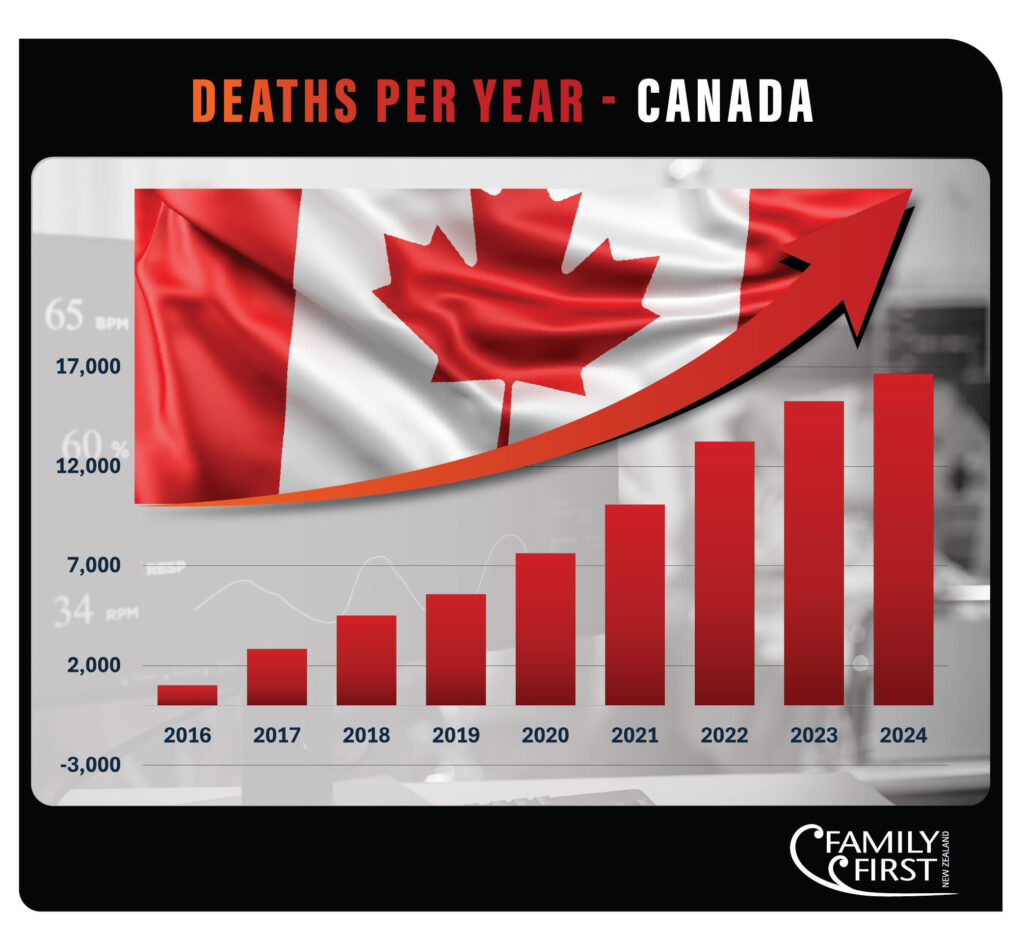
Euthanasia has surged to become one of Canada’s top killers

By | Recent News

The report indicates that cancer, especially lung, colorectal, pancreatic and blood cancer, was the most frequently reported condition in nearly all age groups of people who died by MAID in 2024, except those 85 and older, “for whom ‘other’ conditions were the most frequently cited.

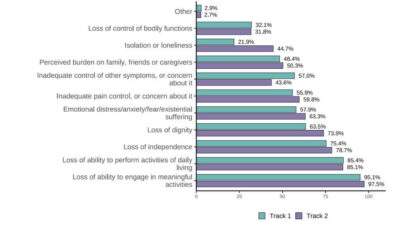
Interestingly, inadequate pain control was only the sixth most common reason for seeking MAID. The primary reasons for euthanasia deaths were related to autonomy and daily function:

  • Loss of ability to engage in meaningful activities (the highest reason, over 95% for both tracks).
  • Loss of ability to perform activities of daily living.
  • Loss of independence and loss of dignity

Figure: Reported nature of suffering, by track

Source: Sixth annual report: Medical assistance in dying Canada

In terms of MAID deaths across districts, Quebec has the highest number of euthanasia deaths at 5,998.  MAID deaths remain heavily concentrated in three provinces, which accounted for nearly 85% of all provisions: Quebec (36.4%), Ontario (4,944 deaths, 30.0%) and British Columbia (2997 deaths, 18.2%).

Nearly all MAID deaths were performed by a doctor or nurse practitioner. While the law allows patients to self-administer the medication in most parts of the country (except Quebec), this option is rarely chosen. The typical (median) age of a person receiving MAID in 2024 was about 78 years old. Recipients who were near the end of their lives (Track 1) had a median age of 78.0 years, while those whose death was not immediately foreseeable (Track 2) were slightly younger, with a median age of 75.9 years. Overall, the average age of MAID recipients continues to rise slightly each year.

There was a notable increase in track 2 euthanasia deaths, which increased by 17% accounting for 4.4% of total euthanasia deaths and up from 4.1% in 2023. Track 2 euthanasia deaths refer to not immediately foreseeable deaths of people and are more likely not to have a terminal condition, to be women, younger and living with a disability.

Dissecting Track 2 euthanasia deaths a little further, it appears people who die by Track 2 euthanasia deaths are significantly more likely to be poor, live in institutions or poor neighborhoods, and be receiving disability support services than those who die under Track 1. Of the 16,104 people who responded to questions around disabilities, roughly one-third (32.9 per cent) reported having a disability.

Alex Schadenberg, chair of the Euthanasia Prevention Coalition (EPC), suggests that MAID for non-terminal conditions mainly targets individuals with disabilities, noting a clear link between disability and Track 2 deaths, as 61.5% of Track 2 recipients identify as disabled.

If that isn’t shocking enough, loneliness and isolation were reported as a factor in 44.7% of Track 2 deaths and 21.9% of Track 1 deaths, suggesting that over 3,800 people listed this as a primary reason. Track 2 recipients were far more likely to be receiving mental health/social support services (31.4%) compared to Track 1 recipients (9.4%), indicating that mental health is a prevalent factor in non-terminal MAID cases.

These statistics are both disturbing and tragic, highlighting pro-life advocates’ concerns about expanding Canadian euthanasia laws to include non-terminal individuals. These vulnerable groups are often affected by factors such as lower socioeconomic status, disabilities, and insufficient social support. The recent MAID data confirms this, showing that social and systemic problems—like loneliness and inadequate disability support—are significant factors influencing requests for MAID.

The most concerning finding in the 2024 Annual Report is not only the total number of MAID deaths but also the speed at which this peak was reached. Despite the growth rate slowing to 6.9% in 2024, this follows years of swift expansion that propelled Canada from having a recently legalized system to becoming a global leader in euthanasia deaths. This trend confirms that MAID is shifting from a last-resort service to a major—and quickly becoming a leading cause of death in Canada.

*Written by Family First writers*

US film highlights concerns over Assisted Dying and its impact on people with disabilities

By | Recent News

A US film about assisted dying and the treatment of people with disabilities is set to premiere at this year’s Sundance Film Festival.  Titled “Life After”, the feature documentary by Reid Davenport (who also has cerebral palsy) explores the story of Elizabeth Bouvia, a 26-year-old woman with cerebral palsy and arthritis, who in 1983 attempted to starve herself to death in a California hospital, citing that life wasn’t worth living. The legal battle that followed turned her into a public figure. A court ruled she did not have the right to die.

However, in 1986, a judge reversed the decision, but Bouvia chose to continue living, though she still preferred to die under different circumstances. She later lived with a live-in nurse in her own apartment until her death in 2014.

The filmmaker also heads to Canada to explore one of the world’s most aggressive assisted dying programs known as MAID (medical assistance in dying). Canada’s Medical Assistance in Dying (MAID) program, which allows euthanasia for chronic illnesses or disabilities, has increased, and MAID is now the 5th leading cause of Canadian deaths. Davenport digs into the unprecedented rise in disabled people dying prematurely due to  MAID and speaks to advocates, patients and doctors who believe euthanasia saves healthcare costs. Davenport views this as a troubling factor in the rise of euthanasia. Davenport acknowledges that assisted dying, in theory, could be safe for terminally ill adults but believes it’s unsafe and risky in a neoliberal society where patients face significant social and economic pressures. Davenport worries that society encourages people with disabilities or chronic medical conditions to view life as not worth living.

The film director is cautious about his documentary being seen as cynical or alarmist by pro-euthanasia advocates and progressives. Davenport believes the issue of assisted dying is complex and that disability activists, not just conservatives, have valid concerns about the potential for abuse and the “slippery slope” argument. He notes that even if the slippery slope argument is seen as fear-mongering, there are instances where it is valid.

The film in varying confronts two powerful systems—the healthcare and bureaucratic systems—challenging their responsibility for overlooking how their shortcomings and policies may not be as effective as they seem. More importantly, Life After is a crucial exploration of the value of life itself.

Article source 

global rise in euthanasia

The troubling surge in assisted suicide

By | Latest News

The push to pass euthanasia and physician-assisted suicide laws over the past few years has seen a global rise and acceleration of various jurisdictions legalising and normalising assisted suicide.  New Zealand, Austria, and Spain all legalized it in 2021, with parts of Australia doing the same in 2022.  In  Italy, the first assisted suicide took place in 2022. And most recently, the United Kingdom, in late November last year, took the first step in passing a physician-assisted suicide measure that would open the door to the practice of allowing doctors to help people take their own lives.

France, Scotland, and Ireland are contemplating similar measures, as well as 19 other jurisdictions that have some form of physician-assisted suicide on the books. In the USA, 10 states and the District of Columbia have legislated physician-assisted suicide, with other states like Delaware, New York, and Maryland looking to secure similar laws.

In countries like Belgium and the Netherlands, where physician-assisted suicide has been legal for more than 10 years (in Belgium and the Netherlands since 2002), those eligible for death by a physician are not just the terminally ill, but those with “chronic, nonterminal, or treatment-refractory illness,” with treatment-refractory illnesses being those conditions that do not respond to treatment. Off growing concern is Canada, which has the most aggressive assisted suicide laws where MAID (medical assistance in dying) is now the fifth leading cause of Canadian deaths and access to MAID services are no longer confined to the terminally ill but can also apply to individuals who are homeless, feeling lonely after the death of a loved one or/and in despair.

In a day and age where there is a growing epidemic of loneliness and despair, we should not be encouraging a culture of death as the antidote to life and its challenges.

Source article

Experts slam Health NZ restructure of palliative care oversight

By | Latest News, Recent News

The Post understands a Health New Zealand restructure proposal would disestablish the two national roles that look after the care of the dying – a palliative care system design manager and senior adviser.

Experts say, the plan to axe the two people dedicated to fixing the postcode lottery of care for dying Kiwis is disturbing, retrograde and potentially disastrous.

The national palliative care adviser was appointed in 2022, after palliative care experts called services for dying Kiwis a neglected, underfunded mess.

It’s understood the proposed new structure would include “palliative care oversight” through a generic role in the primary care team.

Hospital Palliative Care Aotearoa chairperson and palliative care specialist Sinead Donnelly said the plan was “disturbing, demoralising, distressing and retrograde”.

Placing palliative care under primary care neglected the 30% of patients who died in hospitals.

Donnelly said specialists were also upset at the staffing imbalance between palliative care and assisted dying, which has a team of around five dedicated staff. Of the 38,000 Kiwis who die every year, less than 2% use assisted dying services.

“It looks as if Te Whatu Ora is interested in developing assisted dying as a service, and they’re not interested in developing palliative care as a service … So that’s profoundly disturbing to us as well.”

Hospice New Zealand chief executive Wayne Naylor said removing palliative care’s national voice was “potentially disastrous” and could jeopardise 18 months of work to improve services for the dying.

“For the people who want to have a safe and supported death, and who don’t choose assisted dying, this is like a kick in the face to them, like the Government and Health New Zealand doesn’t actually care.”

A report last month reiterated the urgent need for a national palliative care service for children, with three out of four dying children missing out on specialist help.

Its author, child palliative care specialist Amanda Evans, was deeply disappointed by the Health NZ proposal and worried it would further delay – or kill off – any hope of a national paediatric palliative care service.

“My concern is that it’s going to be overlooked, and people wind up worse off than where we are now.”

The national palliative care adviser role was a bridge between all the different services caring for the dying, including family doctors, hospitals and hospices, Evans said.

Health Minister Shane Reti said he remained committed to developing a nationally consistent approach to palliative care. Asked whether the planned staff cuts were acceptable, his office said Health NZ was still consulting on proposed changes, and referred queries to them.

Health NZ national director of planning, funding and outcomes, Dale Bramley, said Health NZ was “committed to moving toward a more sustainable future for New Zealand healthcare”.

Original article: https://www.thepost.co.nz/nz-news/360527404/experts-slam-planned-palliative-care-staff-cut

Assisted dying deaths now make up 1 in 20 Canadian deaths

By | Recent News

New government data reveals that medically-assisted dying (MAID), also known as voluntary euthanasia, accounted for 4.7% of all deaths in Canada in 2023, marking a significant increase in the number of assisted deaths since euthanasia was legalized in 2016. The report, the fifth annual release since legalization, shows that approximately 15,300 people chose medically-assisted death last year, up nearly 16% from 2022.

The majority of those who opted for assisted dying were elderly, with a median age of over 77. Around 96% of cases involved individuals whose death was deemed “reasonably foreseeable,” usually due to terminal conditions like cancer. A smaller group, however, sought euthanasia despite not being terminally ill, citing long-term, debilitating illnesses that severely affected their quality of life.

Canada remains among a few countries to have introduced assisted dying laws in recent years, alongside nations such as Australia, New Zealand, Spain, and Austria. Under Canadian law, consenting adults with a serious and irremediable medical condition can request assistance in dying, provided two independent healthcare providers confirm their eligibility.

In 2023, over 320,000 people died in Canada, with 15,300 opting for assisted death, about one in every 20 deaths. Despite the increase, the growth rate of assisted deaths slowed considerably in 2023 compared to previous years, with a 16% rise instead of the usual 31%. The reasons for this slowdown remain unclear.

For the first time, the report also provided data on the ethnic and racial makeup of those who chose assisted death. It found that approximately 96% of those who died by euthanasia identified as white, despite white people making up only about 70% of Canada’s population. The second-largest group were East Asians, who represented 1.8% of assisted deaths, compared to their 5.7% share of the total population.

Quebec continued to lead the country in the use of medically-assisted death, accounting for nearly 37% of all euthanasia deaths, even though the province represents only 22% of Canada’s population. Quebec has launched a study to explore why its euthanasia rate is disproportionately high.

While the number of assisted deaths grows in Canada, the country still lags behind the Netherlands, where euthanasia accounted for 5% of total deaths last year. In the UK, MPs recently voted to approve a bill allowing terminally ill adults in England and Wales the right to seek assisted death, though it faces months of further scrutiny before becoming law.

Some critics of Canada’s euthanasia system, such as the Christian think tank Cardus, have raised concerns about the rapid growth of assisted dying, calling it alarming. The report comes as Canadian provinces have expressed reservations about expanding the program to include those with mental illnesses, a move initially scheduled for earlier this year but delayed after concerns about system capacity.

In Ontario, a controversial report highlighted cases where individuals were granted assisted dying despite not being terminally ill. One case involved a woman in her 50s with depression and a chemical sensitivity who requested euthanasia after struggling to find housing that met her medical needs. In another instance, a Nova Scotia cancer patient revealed that she was repeatedly asked if she considered assisted dying during her mastectomy surgeries, which she described as “inappropriate.”

Concerns have also emerged over the potential for people with disabilities to consider euthanasia due to inadequate housing or disability benefits. As the number of medically-assisted deaths continues to rise, the slippery slope of euthanasia is seen in the debate over the ethics and the seemingly increasing erosion of safeguards around assisted dying.

Article source

Ministry of Health calls for changes on restrictions around doctors raising assisted dying with patients

By | Recent News

A recommendation from the Ministry of Health’s latest review of the End of Life Choice Act is calling for the gag clause, i.e. the protective measure that restricts doctors from raising assisted dying with patients to be changed. This is one of 23 recommendations made by MOH to strengthen the current law. The ministry recommended that the law be amended so health practitioners could raise assisted dying — but only as part of discussions about a person’s treatment and end-of-life care options. Euthanasia advocates in favour of this law change argue that doctors managing a patient’s palliative care should be able to discuss assisted dying with patients as it aligns with giving patients information and is different to a doctor making recommendations. International evidence would say otherwise regarding coercion and decision at such a vulnerable time in a patient’s life.

On the contrary, groups and individuals such as the Disability Rights Commissioner and the Australia and NZ Society of Palliative Medicine want this law to remain unchanged as it addresses the power imbalance between a doctor and patient and reduces any perception of coercion.

The ministry’s statutory review, presented to Parliament last week, made 23 recommendations, citing the law was generally working well and that there had been no wrongful deaths among the 978 people who had gone ahead with the procedure. Ironically, the Herald reported last month that two former members of the committee felt the oversight process was so inadequate they would not have known if someone had died wrongly.

The MOH report also recommended more powers for the End of Life Review Committee, which is tasked with ensuring each assisted death complied with the law. It said the committee should be able to access a broader range of information and be able to raise any concerning cases with relevant authorities.

Act MP Todd Stephenson has drafted a member’s bill which focuses on one aspect of the law — a requirement that a patient have six months to live to get access to assisted dying. Stephenson said he would consider re-drafting his bill to include some of the ministry’s recommendations, including the removal of the “gag clause” – i.e. a protective measure that safeguards both doctors and patients.

Original article

New Zealand research finds lack of nationwide paediatric palliative care services needs attention

By | Recent News

New research highlights significant gaps in paediatric palliative care services in New Zealand, with children facing inequitable and inadequate support. Currently, Starship Children’s Hospital in Auckland is the only provider of a publicly funded specialist paediatric palliative care service, and the service is small and vulnerable due to workforce pressures and a lack of additional funding.

Each year, about 350 children (aged 19 and under) die of serious illness in New Zealand, and a much larger group could benefit from specialist palliative care. International research suggests that with advanced medical technology, the number of children living with life-limiting conditions is expected to triple in the next decade. However, the workforce of trained paediatric palliative care professionals is insufficient to meet the growing need. As a result, many children and families are missing out on essential care, which has serious consequences for their well-being.

A report commissioned by the Ministry of Health in 2012 recommended the establishment of a nationwide service supported by Starship, with funded clinicans in each district. A group in Wellington has started a donation-funded paediatric palliative care service, but the researchers emphasize that a nationwide, publicly funded service is needed to ensure all children, including Māori, receive quality, compassionate care. They call for more investment in training and resources to build a workforce capable of meeting the demand.

Full story found here https://www.rnz.co.nz/news/national/533164/poor-care-for-dying-children-in-most-regions-report-shows

Growing concerns from Canadian pro-euthanasia group over MAID

By | Recent News
In Canada, concerns are emerging about the potential abuse of Medical Assistance in Dying (MAiD), particularly regarding coercion of vulnerable patients. Members of the British Columbia Civil Liberties Association (BCCLA), which played a key role in legalizing assisted dying, have privately expressed fears that disabled individuals may be pressured by healthcare providers to choose assisted dying. Recent discussions within the organization revealed discomfort with how the practice has evolved, with an employee at the organisation acknowledging that assisted dying being abused.

Data shows that individuals from lower-income backgrounds are more likely to opt for MAiD, raising alarm about the influence of socioeconomic factors. Notably, a case involving a grandmother offered assisted dying instead of a life-saving mastectomy exemplifies these concerns. Legal experts warn that once assisted dying is legalized, there is a risk of expanding eligibility criteria, which could lead to more vulnerable individuals feeling targeted. Cardus, a Canadian Christian think-tank published a revealing report earlier this year on the state of MAID in Canada, noting that MAID is now the fifth leading cause of Canadian deaths and has now gone from exceptional to routine medical practice.

Canadian medical and legal experts have warned that opening the door to assisted dying could lead to the limitations on who is eligible being stripped away. “One of the most worrying aspects of the Canadian experiment is it shows that once you start legalising, there is a risk that a significant number of physicians normalise this practice,” said Trudo Lemmens, a professor of law at the university of Toronto who has testified before Canadian parliamentary committees on the introduction of assisted dying. The growing visibility of a slippery slope continues as advocates of euthanasia are pushing for mental health illnesses and social determinants to be included in the MAID eligibility criteria.

Original article source  https://www.nzherald.co.nz/world/assisted-dying-abused-in-canada-admits-group-that-helped-legalise-it/VYINCFKFHND2VMDQUIKGT46TFU/